A garage door typically requests focus long prior to it quits working. The difficulty is that several house owners obtain made use of to the sound, the doubt, or the slight jagged motion and maintain putting it off. I have actually seen doors limp along for months with clear signs of wear, right up until a springtime breaks on a hectic morning or an opener stress itself right into failure during a storm.
That hold-up can obtain pricey fast. What starts as a regular garage door repair typically becomes damaged panels, bent tracks, burned-out electric motors, or a vehicle entraped inside when you require to leave for work. In both homes and services, little symptoms are frequently very early cautions of bigger mechanical troubles. If you catch them early, the repair is normally simpler, more secure, and cheaper.
The sounds that inform you something is wrong
Garage doors are not silent equipments, and no sincere service technician would certainly guarantee that. You will hear rollers relocating the tracks, the hum of the garage door opener, and the quick pull of the torsion or expansion system doing its job. However when the audio adjustments, pay attention.
A grinding noise often points to used rollers, completely dry bearings, or misaligned track sections. A sharp bang from inside the garage can mean a spring has damaged. Property owners occasionally explain it as sounding like a firecracker or a board breaking. If that takes place, stop utilizing the door instantly. Garage door spring replacement is not a laid-back weekend break job. Springs are under significant stress, and one commercial garage door repair wrong move can trigger serious injury.
Squealing is normally much less significant, however it still matters. Steel rollers, loosened hinges, and dry pivot points all create rubbing, and friction brings about wear. A solution ask for lubrication and change can avoid the sort of pressure that shortens the life of the opener. When a consumer tells me, "It has actually been noisy for concerning a year, yet it still opens," that normally suggests the door has been gradually damaging itself every day.
Rattling can indicate loosened hardware, which is more important than it sounds. Garage doors relocate with vibration, and in time bolts and braces can function themselves loose. A couple of backed-out fasteners near the track sustains or joint points can throw the whole door out of alignment.
A door that moves erratically is not just "eccentric"
One of the clearest indication is a door that no more journeys smoothly. If one side increases faster than the other, if the bottom edge looks inclined, or if the door shudders on the way up, you are checking out greater than typical aging.
In residential garage door repair, uneven traveling commonly traces back to wire wear, springtime inequality, worn rollers, or curved track sections. In some cases it starts after a little influence, such as a trash bin bumping the lower track or a motorist tapping the door panel with a bumper. The damage might look cosmetic initially, yet garage door systems rely on equilibrium. Once that balance is off, each cycle adds stress and anxiety in position that were never ever indicated to carry it.
On business doors, the stakes are also higher. A heavy sectional or rolling steel door that binds during operation can damage automobiles, interrupt distributions, and create a security problem for staff. Commercial garage door repair usually involves larger springtimes, much heavier equipment, and a lot more regular responsibility cycles, so very early signs and symptoms should never be cleaned aside.
A door that jerks or stalls mid-travel can likewise perplex the opener. Modern openers are developed to feeling resistance. If the door unexpectedly binds, the electric motor may turn around, stop, or maintain attempting up until inner elements wear. I have actually seen openers changed when the real culprit was a failing spring or a somewhat twisted track. The electric motor got condemned since it was the noticeable part, but the door itself was the problem.
Slower reaction usually indicates expanding strain
Most people see a failed door. Fewer notice the steady downturn that comes prior to it. If you push the wall switch or remote and the door hesitates for a second or two before relocating, do not ignore it. That time out can suggest an aging capacitor in the garage door opener, signal issues, sensing unit difficulty, or a door that has become as well hefty for the system.
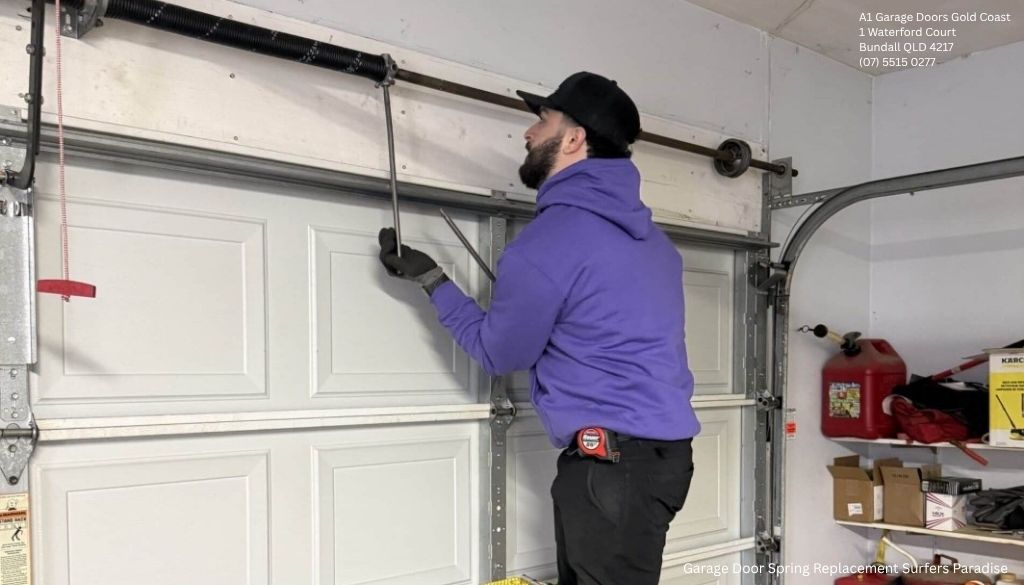
An effectively balanced garage door ought to be very easy for the opener to overview. The opener is not expected to dead-lift the full weight of the door. Springs do that work. When springs deteriorate, the opener makes up, a minimum of for some time. During that duration, the signs and symptoms can be subtle. The door might still open up, yet the motor sounds even more labored, the chain or belt seems a lot more active than usual, and the traveling comes to be less confident.
This is where postponed upkeep ends up being pricey. A springtime issue laid off can lead to opener failure. After that what might have been a solitary garage door spring substitute develops into spring work plus a brand-new electric motor or drive setting up. That is not an unusual sequence.
Gaps, sagging, and noticeable wear are entitled to a closer look
Many warning signs are visible prior to they influence operation. Stand inside the garage with the door shut throughout daylight. If you see uncommon voids along the bottom or sides, something might run out placement. Weather condition removing wears out with time, and that alone is not generally a significant repair, however irregular gaps can disclose track issues, panel bending, or structure changes impacting the opening.
Wood doors might droop with age and wetness direct exposure. Steel doors can damage and crease. Insulated panels can separate at the joints. If the top section bows when the opener pulls it, the support strut might be missing, loose, or inadequate for the weight of the door. I have also seen doors after a current garage door setup where the hardware was appropriate but the framing around the opening had activity that was never ever addressed. The outcome was a door that looked penalty at first and then started securing poorly within a season.
Cables are worthy of unique interest. Torn lift cable televisions often reveal busted hairs near the bottom bracket or drum. If you see that, stop utilizing the door and ask for solution. A cable television that releases under lots can create the door to drop crookedly or jam hard in the tracks.
Rollers likewise narrate. Cracked nylon rollers, shaky stems, and steel rollers with used bearings can all create noise and rough motion. They do not normally stop working at one time. They weaken individually, which is why the door might seem just a little rough at first.
The security turnaround system ought to never be tackled faith
Every automated door must reverse when it meets resistance and must not shut if the photo-eye sensors are obstructed or misaligned. Many individuals presume that because the door still opens up and shuts, the safety and security system have to be fine. That is a mistake.
The turnaround system is not optional. It is among the most vital protections in the entire arrangement, particularly for houses with children, pet dogs, or frequent foot website traffic with the garage. On the industrial side, where doors may run around loading task, the value is also greater.
Here are a couple of indicators the security system needs focus:
The door begins down and promptly reverses without a clear obstruction. The opener lights blink and the door refuses to close from the remote. The door closes only when the wall switch is held down. The sensing unit lenses show up filthy, loosened, or out of line. The door does not reverse when it meets a company blockage throughout an appropriate test.Sometimes the solution is basic, such as cleaning up the lenses or changing sensing unit positioning. Sometimes the issue remains in the electrical wiring, control board, or pressure setups. What issues is not thinking. A door that closes unexpectedly is a significant hazard.
When the opener is the sign, not the cause
It is very easy to presume the garage door opener is failing whenever the system behaves strangely. Sometimes that is true. Equipments wear out, logic boards stop working, chains loosen, and take a trip limits drift. Yet an opener usually discloses problems in other places in the system.
If the opener trembles on its mounting brackets, that can indicate extreme door resistance. If the rail bends greater than usual, the door might be hefty from weak springs. If the opener runs however the door hardly moves, the drive equipment or trolley may be removed, however that damage may have happened due to the fact that the opener was exhausted for months.
I as soon as looked at a door where the home owner had actually changed the opener battery, the remote, and at some point the entire opener, yet the door still struggled. The actual concern was a pair of worn out torsion springs that had shed enough lift to make the door feel nearly two times as heavy to the operator. When the springtimes were replaced and the equilibrium was established appropriately, the brand-new opener instantly appeared far more qualified. It was not a miracle. It was proper lots distribution.
That is why an excellent solution visit checks the complete system, not just the motor system. Garage door repair is rarely concerning one isolated part.
The concealed cost of forcing a stubborn door
An unusual number of significant repair work begin with a simple decision: someone maintains pressing the button. The door waits, reverses, or only raises a few inches, and the customer tries once more. Then again. The opener maintains pulling, the top area stress, the trolley bangs, and a workable problem becomes a bigger one.
If the door is withstanding, something is incorrect. It might be frozen to the flooring in winter, obstructed by particles in the track, or imbalanced because of a springtime issue. The right response is to stop and check, not force the cycle.
With business systems, duplicated efforts can be even more damaging since the equipment is bigger and the electric motors are extra powerful. I have seen bottom areas folded up, drums harmed, and track sustains twisted due to the fact that a door was repeatedly pursued a cord jumped the drum. In commercial garage door repair, downtime issues, yet pushing through a breakdown usually creates even more downtime, not less.
Weather modifications typically reveal existing weaknesses
Garage doors often tend to fall short at inconvenient times, chilly early mornings, heat waves, heavy rain, or the initial busy day after a holiday closure. Climate is not constantly the cause, yet it frequently subjects a system that was currently near its limit.
Cold weather thickens lubricants, stiffens used rollers, and can make fragile components ultimately give way. Moisture can swell timber, corrosion hardware, and damage the bond on older weather seals. Warmth can impact older electronics and batteries in remotes and keypads. Seasonal growth and contraction can additionally transform just how a door takes a trip in the opening, specifically on older frameworks where framing and piece movement currently exist.
That is why I commonly recommend home owners to pay attention to modifications that appear "instantly" with the weather condition. The weather may just be revealing a concern that has actually been constructing for months.
New installment does not assure years of neglect-free service
A current garage door setup ought to minimize the possibility of major problems, yet it does not eliminate the need for observation and maintenance. Setup quality matters, and so does exactly how often the door is used. A family that uses the garage as the major entrance may cycle the door a thousand to fifteen hundred times a year, occasionally a lot more. An active company can far go beyond that in a month.
New doors can establish problems if the initial springtime sizing was limited, the opener settings were never dialed in, or the setting is difficult on hardware. Coastal air, dust, temperature level swings, and high use all accelerate wear. Even a very good installation take advantage of regular adjustment.
If a new door starts making noise, relocating approximately, or losing its seal, do not think it just needs time to "barge in." Garage doors are not meant to work out right into problem. Early modification matters.
How to tell when the problem is urgent
Some garage door concerns can wait a day or 2 for a set up visit. Others should be treated as immediate security issues. Broken springs, torn cables, doors hanging crooked, doors that will not stay open, and doors that slam shut all belong in the urgent classification. So do openers that stop working to turn around correctly or doors that have come partly out of the tracks.
Here is a sensible guideline for homeowners and building managers:
If the door looks uneven, stop making use of it. If you listen to a loud snap or bang, assume a spring or wire concern till tried and tested otherwise. If the opener strains or the door feels abnormally hefty, do not maintain biking it. If security sensors or turnaround attributes do not function, detach automated usage up until repaired. If a commercial door influences staff member or lorry accessibility, treat it as a same-day problem.That might seem mindful, yet garage doors are among the largest relocating elements on a residential property. Valuing the warning signs is profundity, not overreaction.
What routine interest can prevent
Preventive service does not require to be sophisticated to be efficient. Most systems benefit from routine evaluation of springtimes, wires, rollers, hinges, tracks, seals, and opener settings. Lubrication, tightening of hardware, balance checks, and sensing unit testing catch a huge share of issues prior to they become failures.
For domestic garage door repair, preventive upkeep commonly saves money by expanding the life of the opener and lowering emergency situation phone calls. For business garage door repair, it also safeguards scheduling, accessibility, and staff member safety. If a business depends on an operating above door for deliveries or secure storage space, upkeep is not an additional. It belongs to operating reliably.
One detail worth mentioning is cycle life. Springs are ranked for a specific variety of cycles, not a certain number of years. Two homes with the very same door can wear out springs at very different rates relying on exactly how typically they utilize the garage. The exact same reasoning relates to business doors, just extra so. A stockroom door utilized dozens of times a day will mature really in different ways from a gently made use of solution bay.
Choosing repair service over delay
There is an usual moment in almost every solution call where the proprietor states some version of, "I saw that a while back, however I didn't assume it was major." Normally they mean the noise, the minor droop, the slow opening, or the periodic reverse. That reaction is easy to understand. Garage doors often maintain functioning while they are using out.
But that is specifically why indication matter. They are very early signals, not final failings. A sensible garage door repair at the right time can avoid a more costly chain of damage. It can additionally protect against the kind of safety and security threat people do not think of until something declines, binds, or closes when it should not.
If your door is louder than it used to be, slower than normal, visibly unequal, or harder on the opener, count on that reaction that states something has transformed. Whether the answer is a minor change, a garage door spring substitute, opener solution, or a larger repair work, early activity usually offers you far better alternatives than awaiting a total breakdown.
A garage door should relocate with stable confidence. When it starts requesting for help, listen.